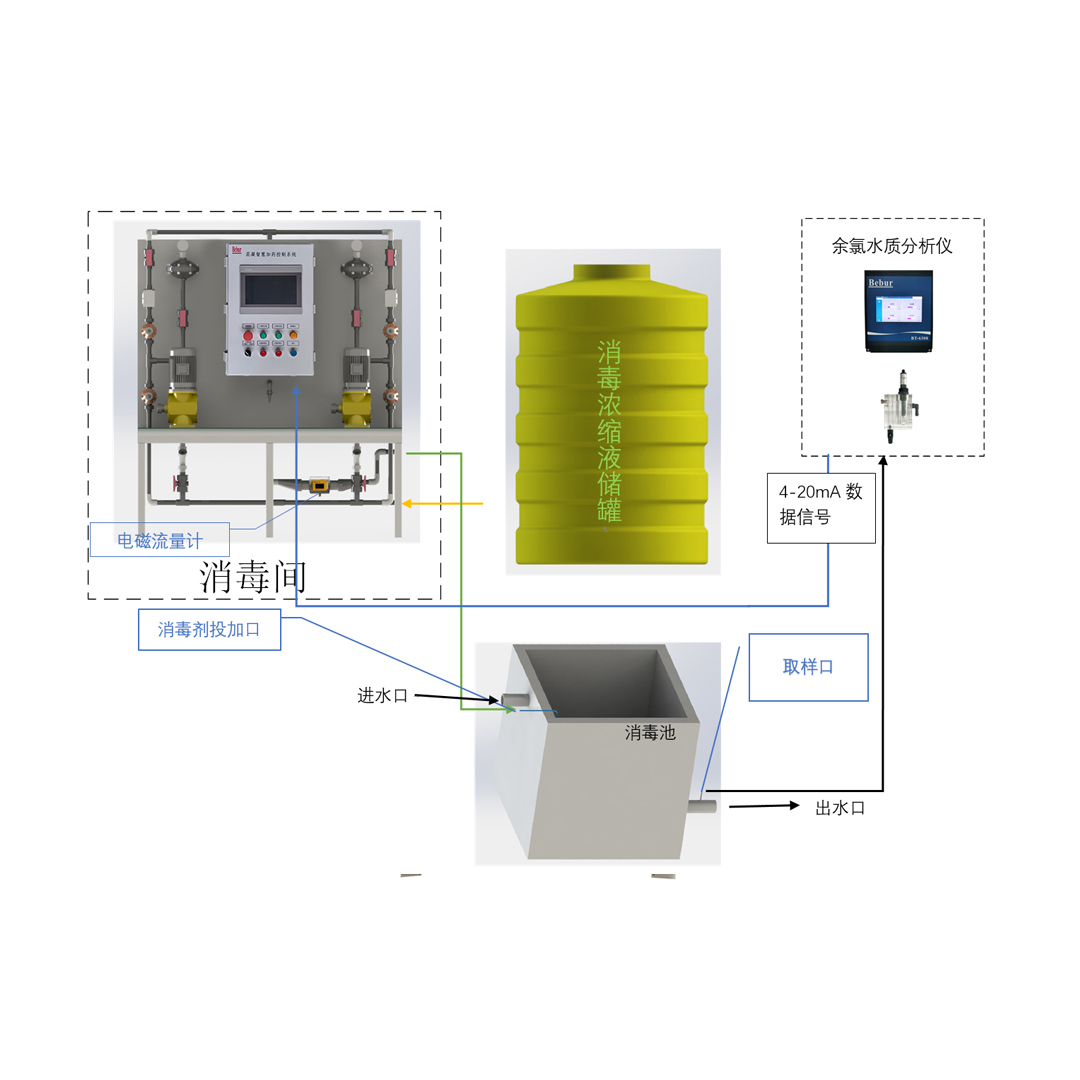
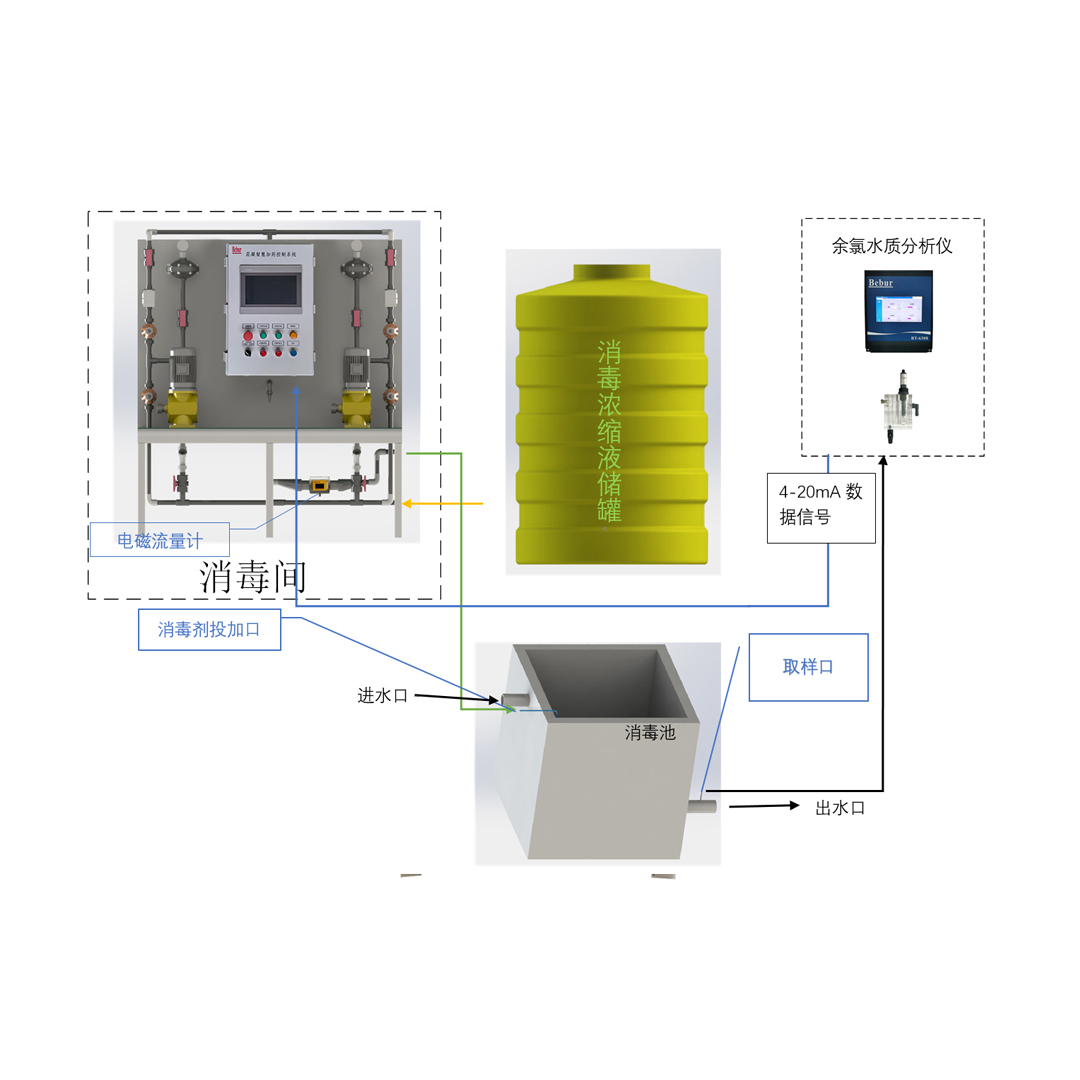
The Bebur BT-9000C chlorination disinfection control system based on flow and residual chlorine monitoring features a dual-control loop control mode, which is more suitable for the disinfection process flow. It features safety and accuracy, stability and efficiency, simple structure, low maintenance and short debugging period. Moreover, it is equipped with an efficient PID control function, which can be combined with the on-site automatic control system or operate independently, offering a more flexible working mode.
The Bebur BT-9000C chlorination disinfection control system based on flow and residual chlorine monitoring features a dual-control loop control mode, which is more suitable for the disinfection process flow. It features safety and accuracy, stability and efficiency, simple structure, low maintenance and short debugging period. Moreover, it is equipped with an efficient PID control function, which can be combined with the on-site automatic control system or operate independently, offering a more flexible working mode.
The BT-9000C chlorination disinfection control system consists of a control unit, metering pump, flowmeter and residual chlorine water quality analyzer. All the equipment is integrated on a single platform.
The BT-9000C chlorination disinfection control system can help users accurately add chemicals, reduce the cost of chemical usage, and decrease the on-site operation and maintenance workload.
※ Optimize water quality
※ Save chemicals
※ Save manpower
※ Independent and cost-effective control system
※ Optimize the disinfection process control flow
The residual chlorine water quality analyzer, as the detection unit of the disinfection dosing control system, can detect the residual chlorine value of the sample water in the disinfection tank and output the real-time residual chlorine value signal of the sample water. It can also calculate and output the proportion control signal of the disinfectant dosing through the optional PID function, increasing the accuracy and efficiency of the system dosing.
As the disinfectant dosing unit in the disinfection dosing control system, the metering pump, when combined in multiple units, can enhance the stability of the system.
The control unit in the disinfection dosing control system receives the residual chlorine value data signal output by the residual chlorine water quality analyzer. After PID calculation, it outputs a proportional control signal to the metering pump to adjust the dosage of the disinfectant, achieving the purpose of regulating and controlling the dosing amount and improving the disinfection effect. The residual chlorine analyzer consists of a complete closed-loop process of detecting the residual chlorine value in water, dosing with a dosing pump, altering the disinfection effect of the sample water, and changing the residual chlorine value in water. The control unit also receives the sample water flow signal and adds it based on the flow ratio to ensure the stability of the entire system.
The disinfection dosing control system is equipped with multi-level protection and can inform users of the real-time status of the system through signal output.
Based on the principle of membrane amperometry, the free chlorine water quality analyzer can quickly analyzer the concentration of dissolved free chlorine in water on site.
The residual chlorine (HCLO and CLO-) in water enters the sensor through the hydrophobic membrane of the residual chlorine sensor. The pH value of the residual chlorine electrolyte inside is approximately 6. Under this environment, the incoming hypochlorite ions (CLO-) will be converted into hypochlorous acid (HCLO) and diffuse to move to the working electrode for consumption. The electrode generates a current signal corresponding to the partial pressure of dissolved residual chlorine. The signal is amplified by the signal amplifier and rectified into a DC signal for output.
After the controller of the residual chlorine analyzer reads the current signal detected by the sensor, it will convert the signal value and display the detection value intuitively.
While measuring the residual chlorine concentration, the temperature of the sample water is also detected simultaneously. The output signal of the sensor is compensated through an electronic device, so that the measured value can be corrected as the temperature changes.
Due to the dual effects of the sensor's design structure and the electrolyte, the residual chlorine sensor is not affected by the pH value of the water during operation.
When the residual chlorine concentration in water changes, the detection values collected by the residual chlorine analyzer will also change accordingly. In this way, real-time and reliable detection basis can be provided for the disinfection effect of the sample water.
When purchasing , please inform the field or industry of use and the characteristics of the measuring medium in order to provide appropriate technical service guidance.
The standard supplies of Bebur BT9000C disinfection dosing control system include:free chlorine analyzer, metering pump. Coagulation control system, electromagnetic flowmeter , control valve,damper etc.

Tel:+86-18001379750

E-mail:sales@bebur.net

Whatsapp:+86-18518487185

Skype:+86-18518487185



 中文简体
中文简体 English


