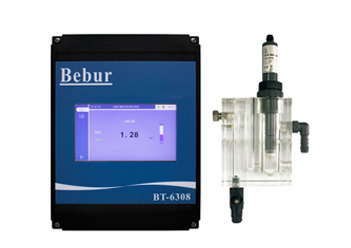
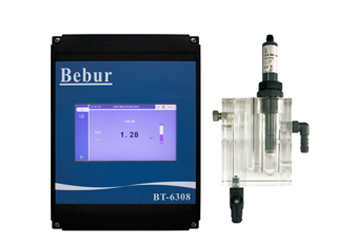
The Online Peracetic Acid Analyzer of Bebur Company adopts membrane sensors, eliminating the need for reagents and buffers. It features stable measurement and reliable performance, which can reduce the maintenance workload for users and lower their usage costs.
Online Peracetic Acid Analyzer
The Online Peracetic Acid Analyzer of Bebur Company adopts membrane sensors, eliminating the need for reagents and buffers. It features stable measurement and reliable performance, which can reduce the maintenance workload for users and lower their usage costs.
Typical applications
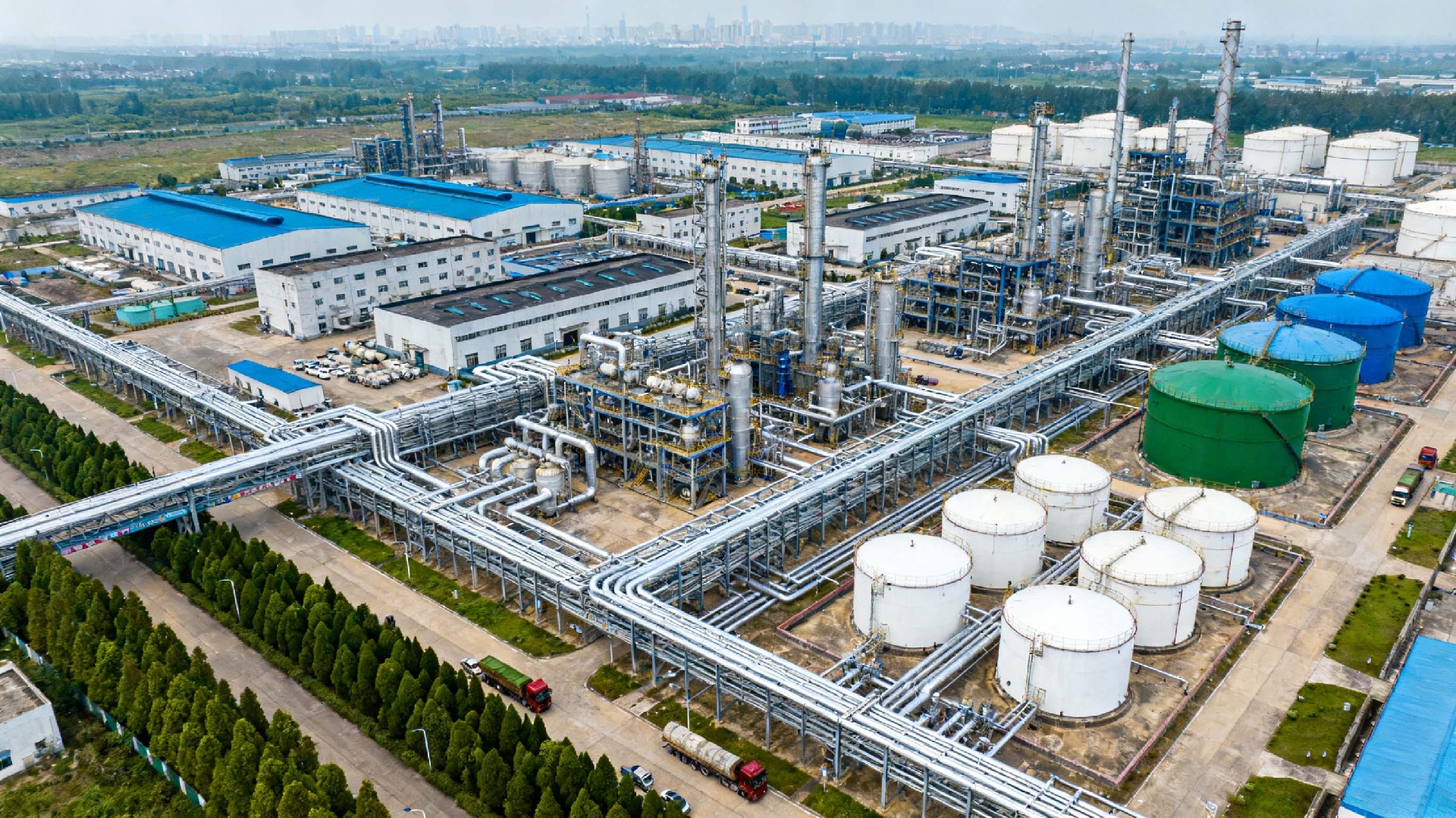
▪The Online Peracetic Acid Analyzer is applicable to the online monitoring of peracetic acid concentration in the disinfection and sterilization processes of drinking water, sewage, industrial process water and pure water, such as:
▪Dosing control for bottle washing machine
▪CIP Factory application
▪Food cleaning water bleaching system
▪Pharmaceutical factories or the field of pharmaceutical intermediates
Performance characteristics
▪The sensor adopts the diaphragm amperometric principle
▪Stable performance and accurate measurement
▪No chemical reagents are needed
▪It is not affected by the cleaning agents in water
▪No zero-point calibration required
▪It has a relatively long service life
▪Suitable for drinking water, process water and brine
Working principle
过The oxyacetic acid sensor is a diaphragm type dual-electrode system. This electrode can automatically adjust the potential to eliminate zero drift. This design enables water quality testing without the need for additional reagents or buffers, reducing the user's usage cost. During calibration, only high-point calibration is required (zero-point calibration is not necessary).
The Online Peracetic Acid Analyzer of Bebur Company can perform automatic dosing process control. It can control the dosage of CH3CO3H(peracetic acid) by automatically adjusting the flow rate, pump speed or valve position to maintain the concentration of peracetic acid stable at the preset value. Automatic dosing can reduce the cost of reagent usage and improve the level of process control.
Technical parameters
Type | Membrane amperometric polarographic dual-electrode sensor | Membrane amperometric polarographic dual-electrode sensor | Membrane amperometric polarographic dual-electrode sensor |
Sensor model | BPES7 | BP9.2 | BP10 |
Range | 0.5-200,5-500,5-1000,5-2000, | 0.5-200,5-2000, 50-20000ppm | 0.5-20,0.5-200,5-2000, 50-5000, |
Resolution | 0.1, 1, 10ppm | 0.1, 1, 10ppm | 0.1, 1, 10ppm |
pH range | pH1-6 | pH1-8 | pH1-8 |
Temperature range | 0-45℃(No ice crystals in the measured water) | 0-60℃(No ice crystals in the measured water) | 0-45℃(No ice crystals in the measured water) |
Temperature compensation | It is automatically completed by the integrated temperature sensor | Integrated automatic temperature compensation | Integrated automatic temperature compensation |
Pressure range | 0.5bar, no pressure shock or vibration | 0.5bar, no pressure shock or vibration | 0.5bar, no pressure shock or vibration |
The first use of polarization time | About 3 hours | 30-180min | 30-180min |
Response time | T90 takes about 3 minutes | T90, approximately 3.5 minutes at 10℃ and about 45 seconds at 50℃ | T90, approximately 1.5 to 3.5 minutes |
Flow velocity requirement | Approximately 0.5L/min | Approximately 0.5L/min | Approximately 0.5L/min |
Material | PVC-U, stainless steel 1.4571 | PEEK, stainless steel 1.4571 | PVC-U, stainless steel 1.4571 |
Calibration | It is recommended to calibrate once every 1 to 3 months | It is recommended to calibrate once every 1 to 3 months | It is recommended to calibrate once every 1 to 3 months |
Interference | Chlorine dioxide, hydrogen peroxide (hydrogen peroxide water), ozone | Chlorine dioxide, hydrogen peroxide (hydrogen peroxide water), ozone | Chlorine dioxide, hydrogen peroxide (hydrogen peroxide water), ozone |

Tel:+86-18001379750

E-mail:sales@bebur.net

Whatsapp:+86-18518487185

Skype:+86-18518487185



 中文简体
中文简体 English