Source:本站Date:2025-11-20
In thermal power plants,preparing qualified water is the"lifeline"to ensure the safe and stable operation of the units.As the first crucial checkpoint in water treatment,the"coagulation-clarification"system directly determines the burden on subsequent systems and the overall water production cost.
For a long time,how to precisely add coagulants has been a common pain point for water treatment personnel in thermal power plants.
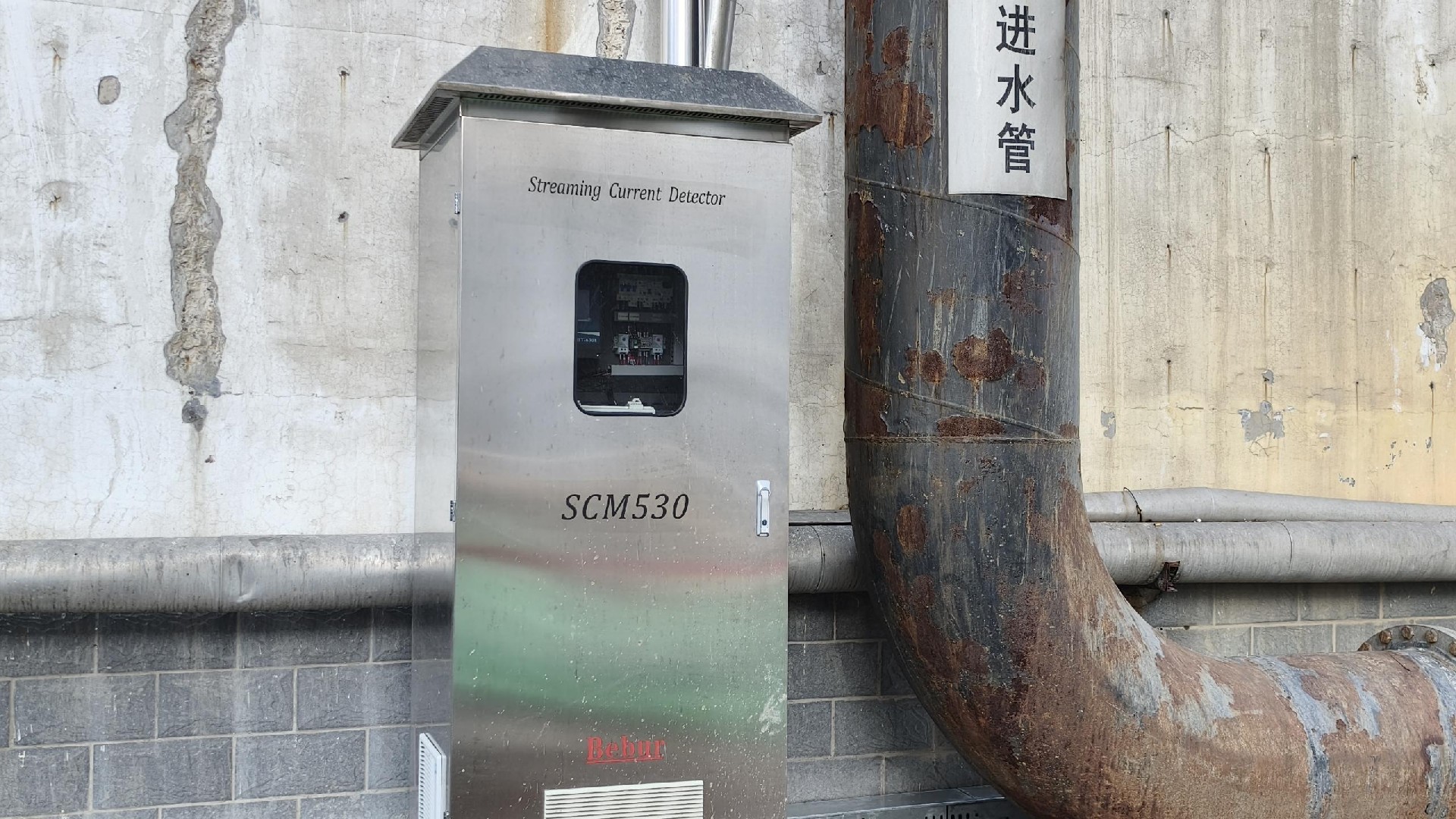
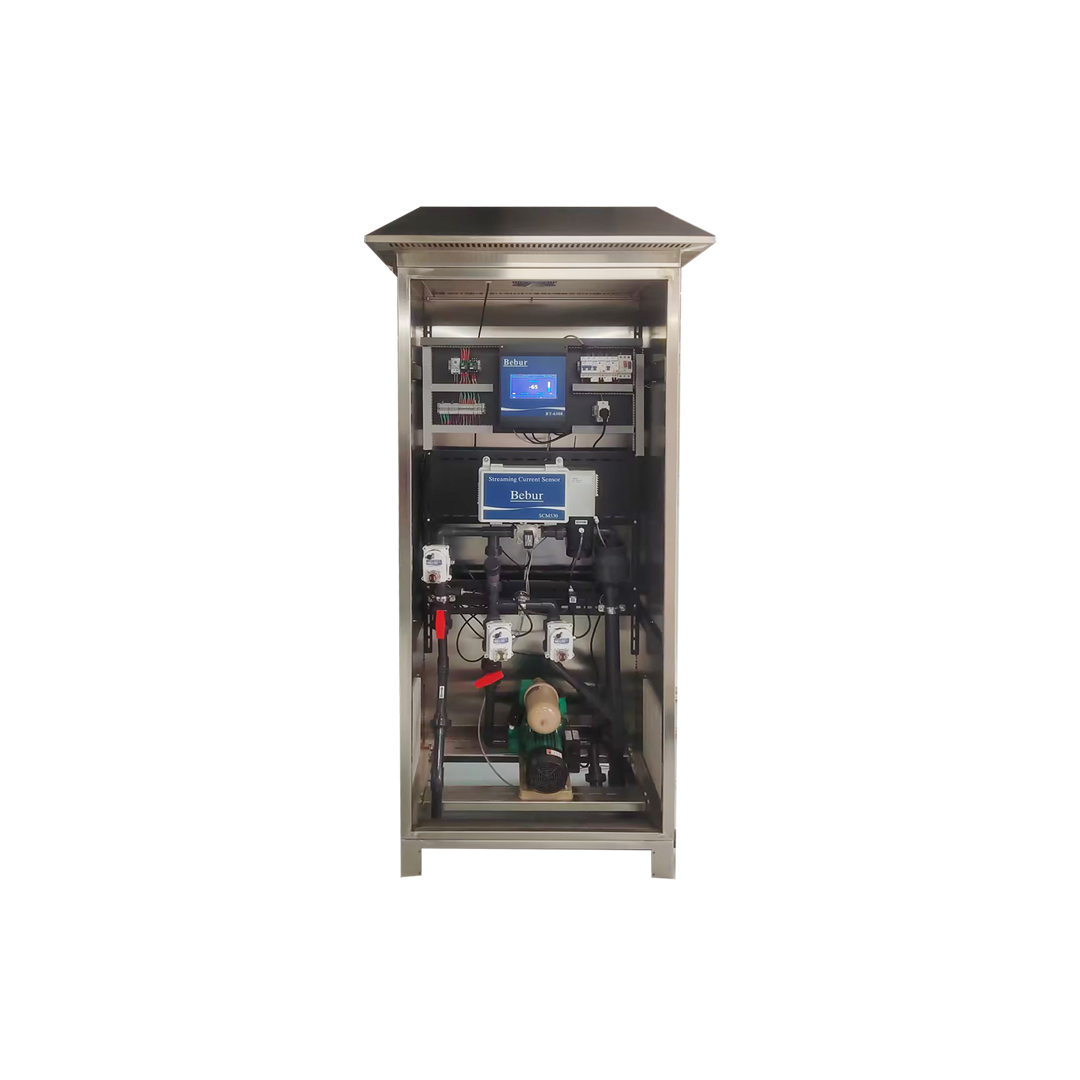
SCM530 Streaming Current Detectors,as a high-precision online colloid charge monitoring instrument,play a crucial role in the water treatment system of power plants,especially in the key link of coagulation-clarification.
This article mainly introduces the application scenarios,solved problems,realized values and key points of application of SCM530 Streaming Current Detectors in a power plant in Jiangsu Province.

The raw water of a certain power plant in Jiangsu Province is usually taken from the Yangtze River or surrounding rivers.The water quality varies significantly with the seasons,tides,rainfall and upstream activities.Before the application of SCM530,power plants mainly faced the following challenges in the coagulation treatment process:
The dosage of coagulant relies on manual experience:Operators usually adjust the dosage based on the data from the turbidity meter and the formation of"flocs"observed by the naked eye.This method is highly lagging and inaccurate,and cannot respond in real time to rapid changes in water quality.
Excessive dosing:leads to waste of chemicals and increases operating costs;Residual aluminium or iron salts may cause contamination or poisoning to subsequent ion exchange resins and reverse osmosis membranes.
Insufficient dosing:Poor coagulation effect,high effluent turbidity,colloidal particles will penetrate the clarifier and filter,and also contaminate the subsequent fine treatment system,shortening the service life of filter materials and membranes.
Slow response when water quality fluctuates:When the raw water quality suddenly changes(such as an increase in turbidity and organic matter content after a heavy rain),manual adjustments often fail to keep up with the speed of change,resulting in prolonged water quality non-compliance.
To understand its application,one must first grasp its principle:
Streaming Current Detectors detect the surface charges of colloidal particles in water.Colloidal particles in water usually carry a negative charge.The function of coagulants(such as polyaluminium,ferric chloride,etc.)is to compress the double electric layer through electro-neutralization,thereby destabilizing the colloids.The SCM530 moves back and forth in the sampled water through a piston,generating an alternating current.The intensity of this current directly reflects the charge level(i.e.,the SC value)of the colloidal particles in the water.
The SCM530 converts this SC value into a standard signal(such as 4-20mA)and transmits it to the PLC or DCS system,thereby achieving closed-loop automatic control of coagulant dosing.

In the application of this power plant,the typical installation and control logic is as follows:
Installation point:SCM530 Streaming Current Detectors are usually installed at the inlet or the end of the reaction zone of the mechanically accelerated clarifiers or flocculation sedimentation tanks.The water sample at this point has undergone chemical mixing and initial reaction,and can truly reflect the coagulation effect.
Control system integration:SCM530 serves as a"detector"to monitor the SC value in real time.The PLC/DCS acts as the"brain",receiving the SC value signal.
Control strategy:The system sets a target set point with an SC value.The PLC compares the real-time SC value with the set point and,through the PID algorithm,outputs control signals to the coagulant dosing pump(usually a metering pump)to automatically adjust the stroke or frequency of the dosing pump.
Closed-loop control process:Changes in raw water quality→SC value deviates from the set point→PLC calculates the deviation→Output instructions adjust the dosing pump→SC value returns to the set point→Achieve stable and optimized coagulation effect.
After the SCM530 was put into use in this power plant in Jiangsu,remarkable economic and technical benefits were achieved:
Significantly reduce chemical costs:Through precise control,the waste of chemicals is avoided,and"on-demand dosing"is achieved.It can usually save 10%to 25%of the consumption of coagulants,directly reducing the cost of water treatment.
Stabilize and improve the effluent quality:The effluent turbidity is more stable,reducing the load on subsequent filters and membrane treatment systems,decreasing the frequency of backwashing and chemical cleaning,and extending the service life of deep treatment equipment.
Realize fully automatic control and reduce manual intervention:It greatly reduces the labor intensity of the operators,eliminates the possibility of human misjudgment,and the system can operate stably even at night or on holidays.
Rapid response to water quality fluctuations:When the raw water quality undergoes sudden changes,the SCM530 can detect the change within tens of seconds and activate the adjustment program.The system's response speed is much faster than that of manual operation,effectively preventing prolonged water quality deterioration.
Reducing sludge production:Precise dosing means that less metal hydroxide precipitates are introduced into the system,thereby reducing the sludge discharge from the clarifier,as well as lowering the cost of sludge treatment and the environmental burden.

In the successful application of this power plant in Jiangsu,some important experiences have also been accumulated:
Representative sampling:It is essential to ensure that the water sample flowing to the SCM530 sensor is representative and that the flow rate and pressure are stable.Appropriate sampling pumps and flow stabilizing devices need to be configured.
Regular maintenance and calibration:The sensor probe needs to be cleaned regularly to prevent contaminants from adhering.
Optimization of set points:The set points of SC are not fixed and need to be fine-tuned according to seasonal changes and long-term operation data.Usually,a series of"beaker tests"need to be conducted in the early stage of operation to assist in determination.
All in all,the successful application of SCM530 Streaming Current Detectors in a power plant in Jiangsu Province is a typical example of the transformation and upgrading of water treatment process control from"experience-driven"to"data-driven".By real-time monitoring of colloidal charge,an essential parameter of the coagulation process,it realizes the closed-loop automatic control of coagulant dosing,ultimately achieving the comprehensive goals of energy conservation and consumption reduction,stable operation,water quality improvement,and staff reduction and efficiency increase,providing a strong guarantee for the safe,economic and stable operation of power plants.

Tel:+86-18001379750

E-mail:sales@bebur.net

Whatsapp:+86-18518487185

Skype:+86-18518487185



 中文简体
中文简体 English