Source:本站Date:2026-11-03
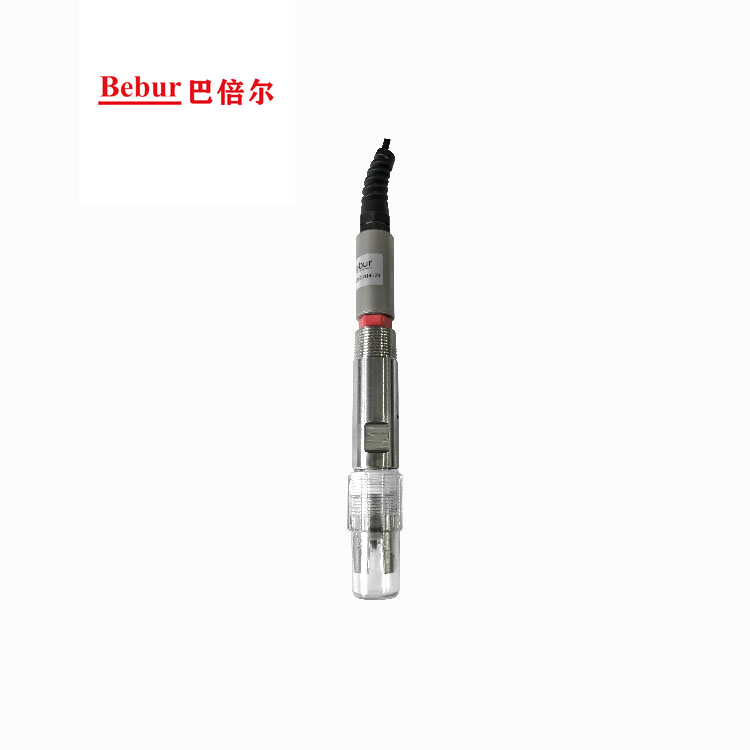
The Bebur BS-EC350 liquid coolant conductivity sensor adopts advanced anti-polarization and signal isolation technology to effectively eliminate external interference, ensuring accurate and stable performance even in complex electromagnetic environments. Its easy installation and compatibility with various media such as propylene glycol, ethylene glycol and deionized water provide a reliable safety assurance for liquid cooling systems.
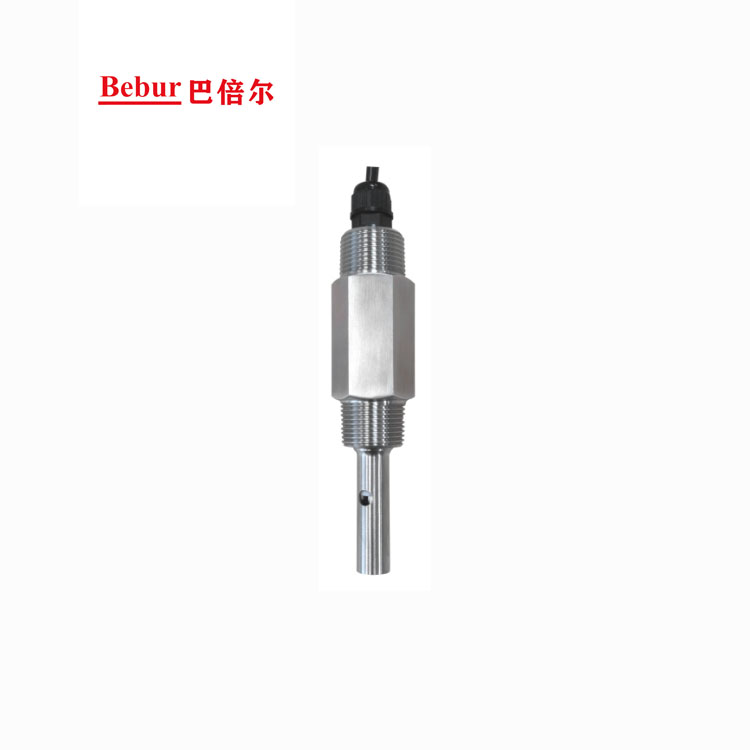
• Advanced anti-polarization technology for stable measurement
• Signal isolation technology to eliminate external interference
• Accurate, stable performance even in complex electromagnetic environments
• Easy installation
• Compatible with a wide range of media (propylene glycol, ethylene glycol, deionized water)
• Reliable safety assurance for liquid cooling systems
In data center liquid cooling systems, coolant conductivity is a key indicator of water quality and ionic stability. As the heat-transfer medium circulates, changes in conductivity can signal coolant degradation, ionic contamination or concentration drift, which can affect corrosion protection and thermal performance. Continuous conductivity monitoring helps operators:
• Track coolant concentration and water-quality stability in real time
• Detect ionic contamination or dilution at an early stage
• Protect metal piping, cold plates and server components from corrosion risks
• Maintain stable heat-transfer performance and system reliability
By continuously tracking conductivity, the BS-EC350 provides the actionable data needed to keep a liquid cooling loop stable, safe and efficient.
Table 1. BS-EC350 model variants and key parameters
Parameter | BS-EC350A | BS-EC350B | BS-EC350C | BS-EC350D | BS-EC350E |
Measuring Range | 0–20 μS/cm | 0–200 μS/cm | 0–1000 μS/cm | 0–2000 μS/cm | 2–20000 μS/cm |
Temperature Range | 0–100 °C | 0–100 °C | 0–100 °C | 0–100 °C | 0–60 °C |
Cell Constant | K = 0.01 | K = 0.01 | K = 0.1 | K = 0.1 | K = 1 |
Input Supply | 18–27 VDC | 18–27 VDC | 9–27 VDC | 9–27 VDC | 12–24 VDC |
Dimensions | Φ16 × 138 mm | Φ16 × 138 mm | Φ13 × 165 mm | Φ13 × 165 mm | Φ16 × 160 mm |
Table 2. General specifications
Parameter | Specification |
Output | 4–20 mA / RS485 (selectable) |
Communication Protocol | Modbus RTU |
Cable | 5 m standard cable, extendable to 10 m |
Applicable Medium | Pure water, deionized water, PG25/GE25 |
Temperature Compensation | PT1000 |
Material | 316L stainless steel |
Accuracy | ±1.5% FS |
T90 Response Time | ≤ 60 s |
Process Connection | 3/4" NPT |
The BS-EC350 is available in five measuring-range configurations, selected at the end of the model code:
Table 3. Model selection
Model Code | Measuring Range |
BS-EC350-A | 0–20 μS/cm |
BS-EC350-B | 0–200 μS/cm |
BS-EC350-C | 0–1000 μS/cm |
BS-EC350-D | 0–2000 μS/cm |
BS-EC350-E | 2–20000 μS/cm |
The overall dimensions of the BS-EC350 (model A shown as reference) are illustrated in the dimensional drawing (unit: mm). Key dimensions are summarized below:
Table 4. Key dimensions (model A reference)
Dimension | Value |
Overall length | 138 mm |
Body diameter | Φ16 mm |
Process connection | 3/4" NPT (both ends) |
Q1. Which measuring range should I choose?
Five ranges are available, from 0–20 μS/cm (model -A) for ultra-pure coolant up to 2–20000 μS/cm (model -E) for high-conductivity fluids. Select according to the conductivity level of your coolant.
Q2. What coolants can the BS-EC350 measure?
The sensor is compatible with pure water, deionized water, and PG25 / GE25 coolant formulations (propylene glycol and ethylene glycol based).
Q3. Does the sensor resist electromagnetic interference?
Yes. Advanced anti-polarization and signal isolation technology eliminate external interference, ensuring accurate and stable performance even in complex electromagnetic environments.
Q4. What output signals are available?
The sensor provides 4–20 mA and RS485 outputs (selectable), with Modbus RTU communication protocol for flexible integration.
Q5. Does the sensor require temperature compensation?
No additional configuration is needed: automatic temperature compensation (PT1000) is built in.
Q6. What is the accuracy of the sensor?
The accuracy is ±1.5% FS, with a T90 response time of ≤ 60 s.
Q7. Can the cable be extended?
Yes. A 5 m cable is supplied as standard and can be extended to 10 m.
2026-11-03
2026-11-03

2026-11-03
2026-11-03
2026-10-30

Tel:+86-18001379750

E-mail:sales@bebur.net

Whatsapp:+86-18518487185

Skype:+86-18518487185



 中文简体
 English
