Source:本站Date:2026-11-03
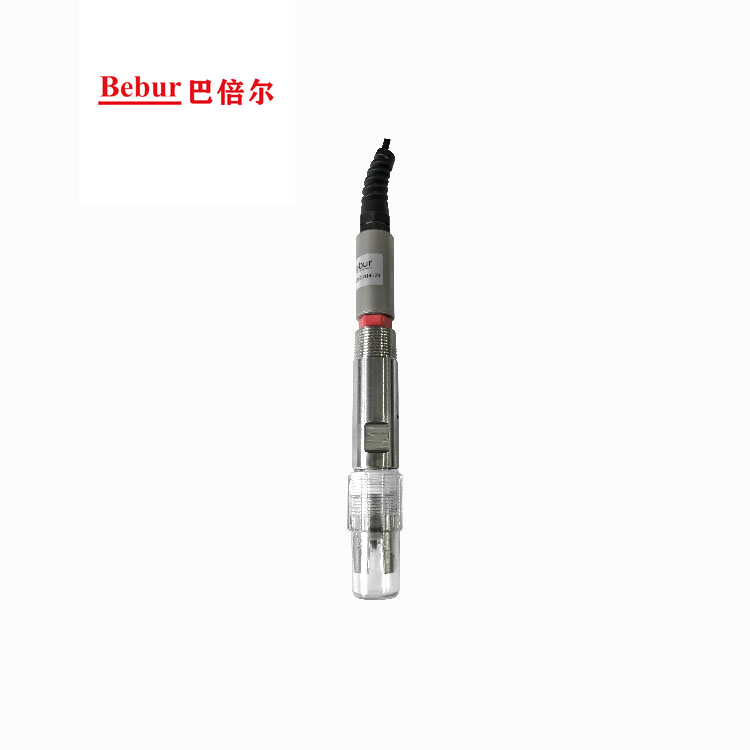
Turbidity is a key indicator of coolant cleanliness; its value directly reflects the content of suspended impurities in the coolant. The Bebur BS-TURB113 liquid-coolant turbidity sensor operates on an optical opposed-beam (through-beam) principle: a transmitter emits light at a specific wavelength, and a receiver measures the transmitted light that passes through the coolant under test. When suspended impurities are present in the coolant, the light is scattered and absorbed, weakening the intensity at the receiver. By measuring the degree of light attenuation, the sensor accurately calculates the turbidity value of the coolant. Thanks to its distinctive measurement principle and technical advantages, the sensor precisely captures subtle changes in coolant turbidity without being affected by reflection from stainless steel piping, delivering real-time, reliable data to support the safe operation of liquid cooling systems. It has become an indispensable "cleanliness guardian" in the liquid cooling industry.
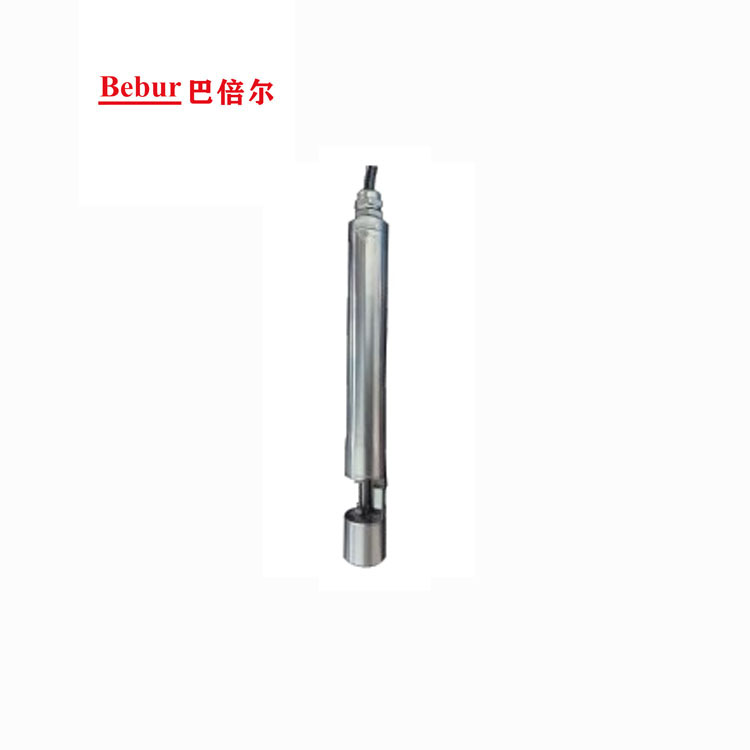
• Online real-time monitoring with high accuracy
• Simple operation, high reliability
• No external module required, integrated design
• Sapphire measurement window
• Unaffected by reflection from stainless steel piping
In data center liquid cooling systems, the coolant is the primary heat-transfer medium, and its cleanliness directly affects thermal performance and equipment reliability. Suspended particles, corrosion by-products and residual contaminants in the circulating coolant can cause fouling, filter clogging and cold-plate blockage, degrading cooling efficiency over time. Continuous turbidity monitoring helps operators:
• Detect coolant contamination at an early stage
• Protect cold plates, filters and flow paths from fouling and blockage
• Maintain stable heat-transfer performance in the cooling loop
• Extend coolant life and overall system reliability
By continuously tracking turbidity, the BS-TURB113 provides the actionable data needed to keep a liquid cooling loop clean, stable and efficient.
Table 1. BS-TURB113 technical specifications
Parameter | Specification |
Model | BS-TURB113 |
Applicable Medium | Pure water, deionized water, PG25, EG25 |
Measuring Range | 0–10 NTU / 0–100 NTU |
Resolution | 0.001 NTU |
Response Time | < 30 s (measurement cycle 10 s) |
Light Source | LED |
Repeatability | ≤ 1% |
Load | 120 Ω |
Digital Output | RS485 |
Ambient Temperature | 0–50 °C |
Material | 316L stainless steel, titanium alloy |
Self-cleaning (optional) | Cleaning brush |
Working Pressure | < 6 Bar |
Diameter | 30 mm |
Length | 267 mm |
Ingress Protection | IP68 |
The BS-TURB113 is available in two measuring-range configurations, selected at the end of the model code:
Table 2. Model selection
Model Code | Measuring Range |
BS-TURB113-A | 0–10 NTU |
BS-TURB113-B | 0–100 NTU |
The overall dimensions of the BS-TURB113 are illustrated in the dimensional drawing (unit: mm). Key dimensions are summarized below for reference:
Table 3. Key dimensions
Dimension | Value |
Overall length | 267 mm |
Body diameter | φ29 mm |
End diameter | φ30 mm |
Q1. How does the BS-TURB113 measure turbidity?
It uses an optical opposed-beam (through-beam) principle. A transmitter emits light at a specific wavelength and a receiver measures the transmitted light. Suspended impurities scatter and absorb the light, and the sensor calculates turbidity from the degree of light attenuation.
Q2. Is the measurement affected by stainless steel piping?
No. The sensor is specifically engineered to suppress optical interference from reflection off stainless steel piping, delivering stable and accurate readings in liquid cooling loops.
Q3. What coolants can the BS-TURB113 measure?
The sensor is suitable for pure water, deionized water, and PG25 / EG25 coolant formulations.
Q4. Which measuring range should I choose?
Two ranges are available: 0–10 NTU (model -A) for ultra-low-range detection, and 0–100 NTU (model -B) for general coolant monitoring. Select according to the cleanliness level of your application.
Q5. What output signal does it provide?
It provides a digital RS485 output for easy integration with monitoring and control platforms.
Q6. Can the sensor be cleaned automatically?
Yes. An optional self-cleaning brush is available to reduce manual maintenance frequency.
Q7. How is the sensor protected?
The sensor is rated IP68, suitable for immersion in liquid cooling loops, and its wetted parts are made of 316L stainless steel and titanium alloy.
2026-11-03
2026-11-03
2026-11-03

2026-11-03
2026-10-30

Tel:+86-18001379750

E-mail:sales@bebur.net

Whatsapp:+86-18518487185

Skype:+86-18518487185



 中文简体
 English
