Source:本站Date:2026-10-13
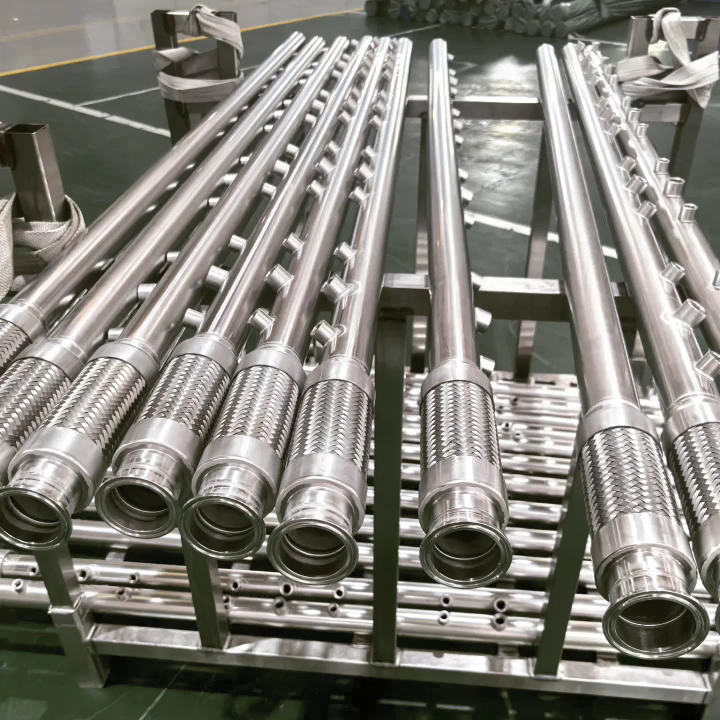
Core Conclusion: The manifold is a core integrated piping component in liquid cooling systems that distributes coolant to individual server cold plates. Its internal channels feature complex intersections and numerous blind holes, making contaminants highly concealed; thus, cleanliness control of manifolds represents a significant challenge in liquid cooling systems. The Bebur BT8500 Liquid Particle Counter, based on the light obscuration principle, can be directly integrated into the circulation lines of manifold channel cleaning machines. It enables real-time monitoring of particle size distribution and count changes in the cleaning fluid, thereby achieving closed-loop control that shifts cleaning processes from "experience-based" to "data-driven."
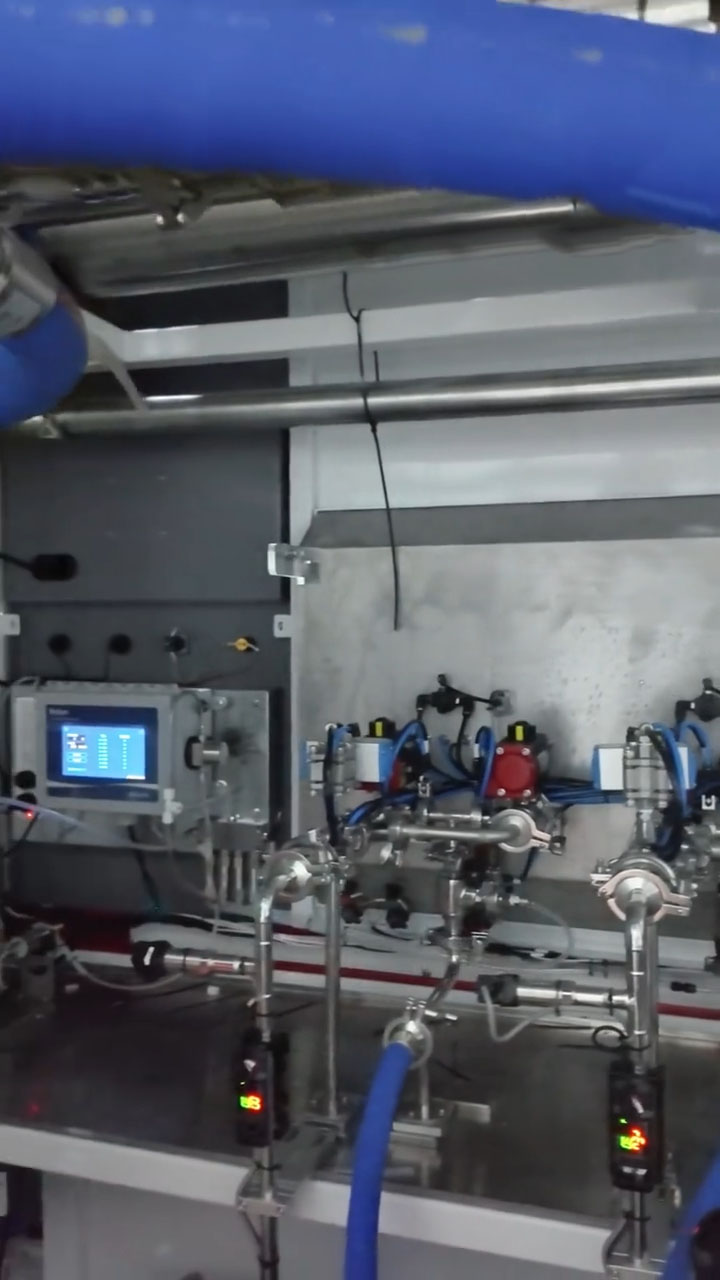
Manifold cleaning typically employs a flow-channel flushing method: a cleaning machine pumps cleaning fluid into the manifold's internal channels at constant pressure or flow rate (supporting pulse and reverse-flushing modes) to scour and dislodge particulate contaminants adhering to the walls. The particle-laden flushing fluid is then discharged from the outlet. Compared with immersion or ultrasonic cleaning, flow-channel flushing acts directly on complex internal cavity surfaces, providing more thorough removal of contaminants from blind holes and intersecting channels.
Data Center Cold-Plate Liquid Cooling Test and Verification Technology White Paper (2023): For manifolds, deionized water is used as the test medium to circulate and flush each manifold component for 10 minutes. The cleanliness of the deionized water after flushing the manifolds shall meet no less than Class 9 per GJB 420B-2005.
For determining compliance with Class 9 or higher, the solid contamination level is established according to the highest particle count grade within the B–E size range per 100 mL of working fluid, following the solid contamination grade determination principles of GJB 420B-2005. The B–E size ranges in GJB 420B-2005 correspond to particle counts for sizes >5 μm, >15 μm, >25 μm, and >50 μm, respectively.
Size Code | Particle Size | GJB 420B Class 9 Limit (≤) |
A | >1 μm | 400,000 |
B | >5 μm | 156,000 |
C | >15 μm | 27,700 |
D | >25 μm | 4,900 |
E | >50 μm | 848 |
F | >100 μm | 128 |
YD/T 6358-2025 Technical Requirements for Cold-Plate Liquid-Cooled Data Centers: Manifolds shall be cleaned with deionized water prior to shipment. The deionized water used for cleaning shall have a pH between 6 and 8 and a conductivity no greater than 10 μS/cm. The pH fluctuation of the deionized water before and after cleaning shall be less than 0.2, and the conductivity fluctuation shall not exceed 2 μS/cm. After cleaning, the water quality shall have a pH between 6 and 8, a conductivity no greater than 10 μS/cm, and shall contain no visible impurities.
T/CAEE 103-2026 Performance and Test Specification for Data Center Liquid Cooling System Manifolds: Clean deionized water shall be used to circulate and flush the internal cavity of the manifold. The flushing fluid volume shall be no less than five times the internal cavity volume of the tested product. During flushing, the medium flow velocity in the main pipe shall be no less than 1.5 m/s, and the flushing time shall be no less than 10 minutes. All flushing fluid shall be collected, and a particle counter shall be used to detect particle count and size distribution. For manifolds used in cold-plate liquid cooling systems, the solid particle content in the internal cavity after cleaning shall not exceed 10 particles/L for particles larger than 100 μm, and 100 particles/L for particles larger than 50 μm. For manifolds used in immersion liquid cooling systems, the particle count for sizes larger than 50 μm shall not exceed 50 particles/L.
The BT8500 Liquid Particle Counter operates on the light obscuration (also known as light blockage) principle. A laser beam, collimated by a lens assembly, passes through a flow cell. The test liquid flows through at a constant rate. When no particles are present, the optical detector receives a stable light signal. When a particle passes through the sensing zone, it blocks part of the light, generating a negative voltage pulse signal. The pulse amplitude is proportional to the particle's effective blocking area (i.e., particle size), and the number of pulses corresponds to the particle count.
Model: BT8500
Measurement Principle: Light Obscuration
Sensor Type: Laser Sensor
Measurement Range: 1–200 μm / 2–400 μm / 2–750 μm
Particle Reporting Range: 2–300 μm (customizable extension available)
Detection Channels: Standard 8 channels; optional 16/24/32 channels
Data Output: MODBUS RTU-RS485 (standard); 4–20 mA (optional)
Operating Temperature: 5–50°C (standard model); 5–70°C (high-temperature model)
The BT8500 features an external sensor design for easy cleaning and maintenance. Its built-in calibration function supports high-precision on-site calibration without the need to return the unit to the factory, saving time and costs. The instrument supports both cumulative and group counting modes to meet data requirements for different cleanliness evaluation systems. It can be optionally equipped with the BS-PHS276 liquid cooling pH sensor and the BS-EC350 liquid cooling conductivity sensor to enable simultaneous monitoring of pH, conductivity, and particles.
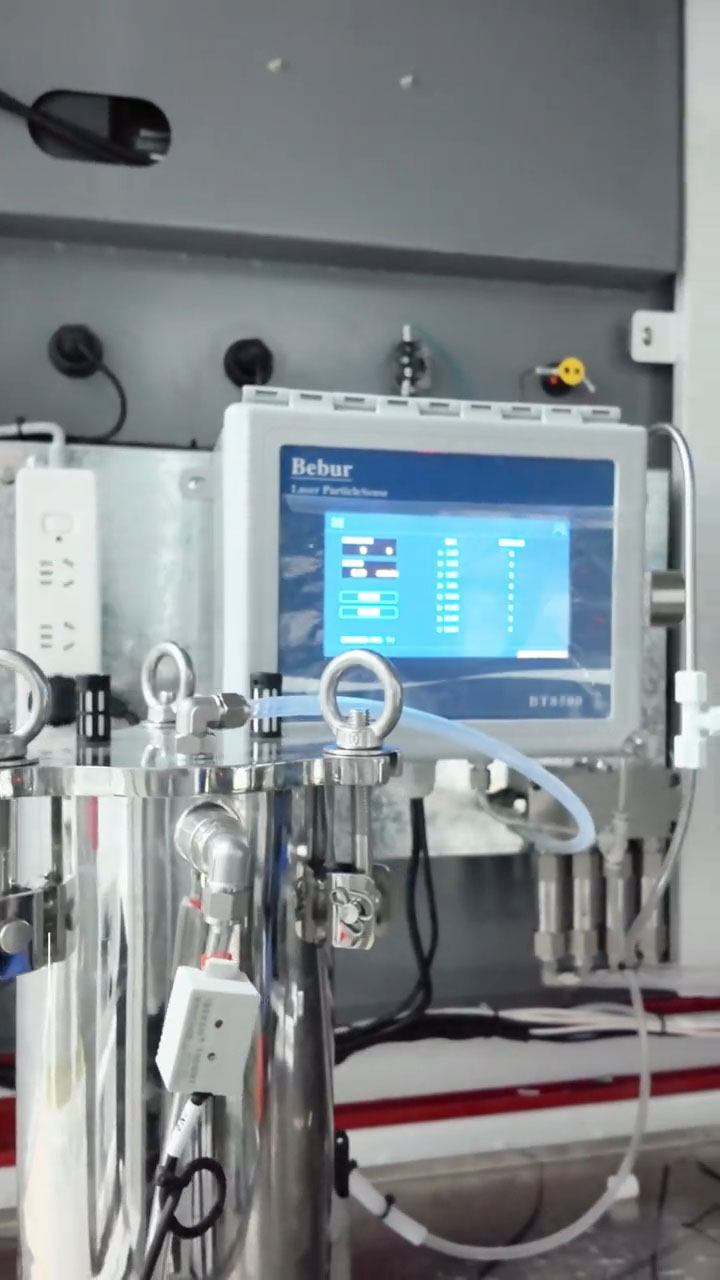
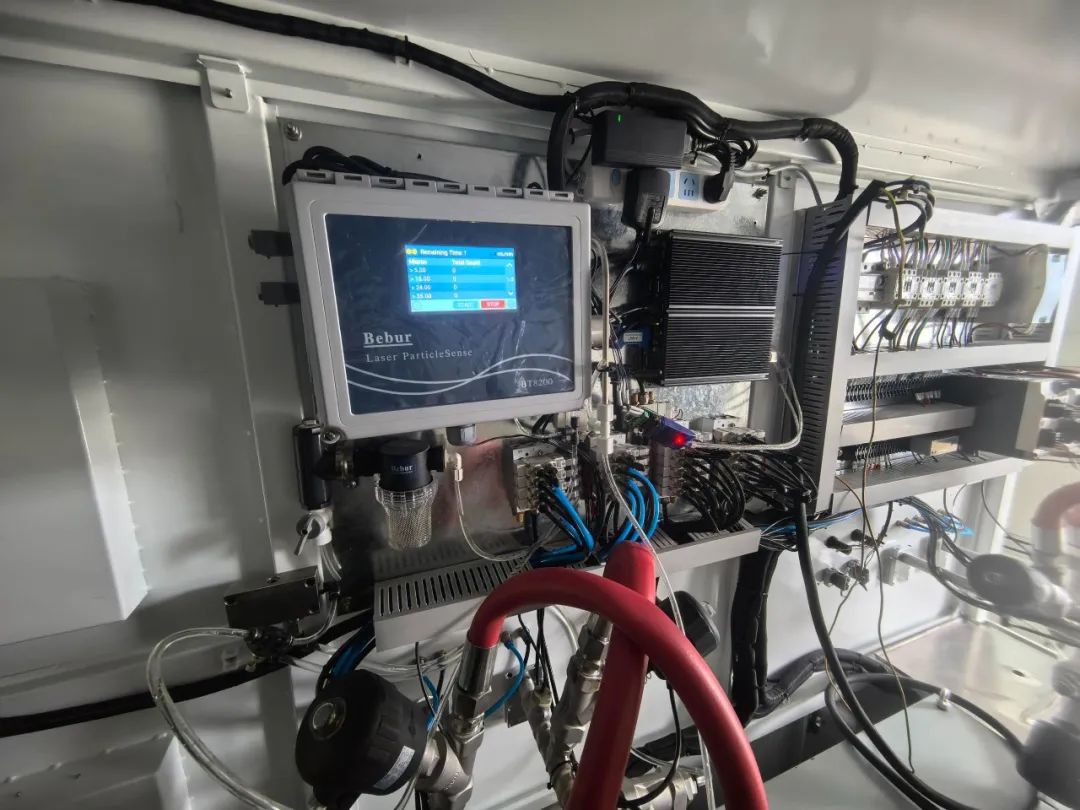
The core concept of integrating the BT8500 into manifold cleaning machines is to parameterize the cleaning process, automate the inspection process, and digitize standard execution. The specific solution involves installing the BT8500 Liquid Particle Counter on a bypass branch of the cleaning machine's circulation loop, without cutting into the main pipeline or disrupting the original cleaning process flow.
Workflow:
Channel Flushing: The cleaning machine flushes the manifold's internal channels at constant pressure/flow rate, supporting pulse and reverse-flushing modes to dislodge wall-adhered particles.
Bypass Sampling and Detection: The particle-laden flushing fluid flows through the BT8500 sensor's flow cell via the bypass branch, where particle counts for different size ranges are recorded in real time.
Data Output and Judgment: Detection data is output via MODBUS RTU-RS485 to the cleaning machine's control system, which converts the data into cleanliness grades in real time and compares them against preset standard values.
Closed-Loop Control: When particle concentration exceeds limits, the system can immediately trigger an alarm and automatically activate high-precision filters for circulation purification, forming a "detect–judge–purify" closed loop to ensure continuous cleaning effectiveness.
Under flow-channel flushing conditions, high-speed fluid movement in the pipelines can generate bubbles. Light obscuration sensors may misidentify bubbles as particles, leading to inflated counts. Therefore, the BT8500 is equipped with a degassing device for manifold cleaning machine applications to ensure data accuracy. Bebur's degassing solutions, accumulated through extensive application in liquid cooling cleaning equipment, effectively eliminate bubble interference with particle counting.
On mass production lines for manifolds, integrating the BT8500 into flow-channel cleaning machines enables online particle counting of the flushing fluid from every cleaned manifold, achieving 100% inspection. This mode is particularly suitable for integrated piping components with complex internal channels, eliminating the need to transport parts to a laboratory for sample analysis. It offers fast inspection cycles, is non-destructive, and provides quantifiable, traceable results.
Cleaning fluid in manifold cleaning machines is typically recirculated. Over extended operation, particulate and ionic contaminants gradually accumulate. Real-time monitoring data from the BT8500 helps maintenance personnel assess the actual contamination state of the cleaning fluid. When particle concentration reaches a critical level that affects cleaning performance, the fluid can be replaced promptly, preventing poor cleaning outcomes or secondary contamination of components due to fluid degradation.
Bebur liquid particle counters are widely used by leading companies in the liquid cooling industry, including AVC (Qi Hong), Boyd, and Kaori. In Boyd's liquid cooling component cleaning processes, Bebur online cleanliness monitoring equipment is integrated into the bypass of the cleaning machine's circulation loop. This enables continuous real-time monitoring of solid particles, pH, and conductivity, shifting quality control upstream to the production line cleaning stage and effectively reducing product defect rates.
Q: Can the BT8500 Liquid Particle Counter distinguish between metal and non-metal particles?
A: No. Based on the light obscuration principle, the BT8500 can only detect particle size and quantity. It cannot distinguish between metal particles, non-metal particles, or fibers, nor can it identify particle shape.
Q: Does installing the BT8500 in a manifold channel cleaning machine require modification of existing equipment?
A: No. The BT8500 online particle counter uses a bypass installation method. It only requires adding a sampling branch to the cleaning machine's circulation loop, without cutting the main pipeline or affecting the original cleaning process flow. No modification to existing equipment is needed.
Q: How can bubble interference with test results be avoided?
A: Bubbles are misidentified as particles by light obscuration sensors, so a degassing device is essential. It is recommended to install a degasser in the bypass sampling line, or to select Bebur's degassing accessory solutions designed specifically for liquid cooling cleaning conditions.
As a core distribution component in liquid cooling systems, the internal cleanliness of the manifold directly impacts system safety and reliability. The Bebur BT8500 Liquid Particle Counter, leveraging light obscuration technology and integrated via bypass into the manifold cleaning machine's circulation loop, enables real-time monitoring of particle concentration, automatic alarm upon threshold exceedance, automatic determination of cleaning endpoints, and cleaning fluid life management. This helps liquid cooling component manufacturers upgrade their cleaning processes from "experience-driven" to "data-driven," establishing a robust cleanliness defense for the long-term reliable operation of data center liquid cooling systems.

2026-10-13
2025-11-20
2025-11-20
2025-11-20
2025-11-03

Tel:+86-18001379750

E-mail:sales@bebur.net

Whatsapp:+86-18518487185

Skype:+86-18518487185



 中文简体
 English
