Streaming Current Detector (SCD)
The Bebur Streaming Current Detector detects the charge of ions and colloids in water — similar to Zeta potential — and automatically regulates coagulant dosing. Real-time monitoring, intelligent control and precise dosing keep your water quality stable while saving chemicals and improving plant efficiency.
What Is a Streaming Current Detector?
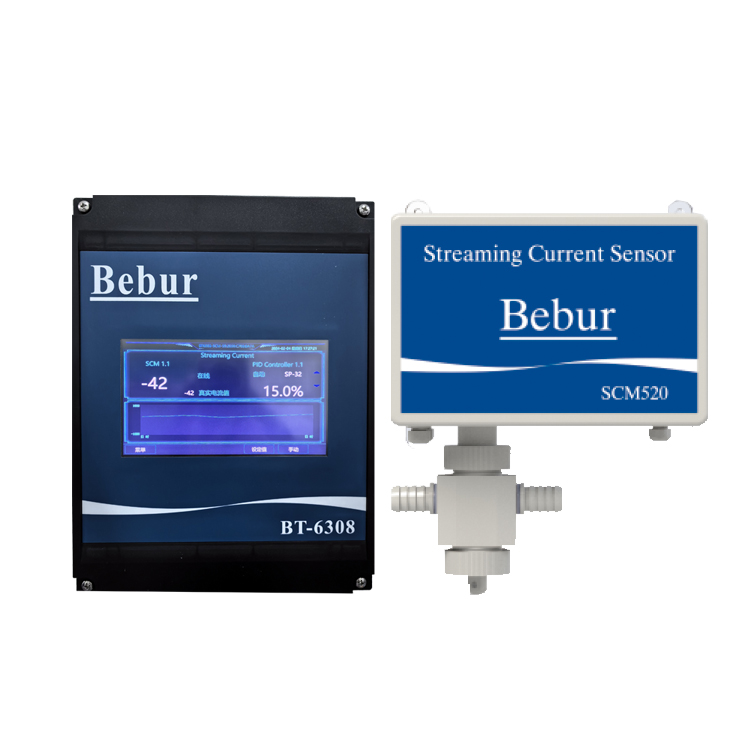
A Streaming Current Detector — also called an online streaming current detector (SCD) — is an instrument for continuously monitoring the coagulation effect in water treatment. It is the main component of automatic coagulant dosing systems for raw water and wastewater coagulation-sedimentation processes.
The Bebur Streaming Current Detector detects the charge (similar to Zeta potential) of ions and colloids in the water based on the streaming current principle, and is used for automatically regulating and controlling the dosage of coagulants. Charged ions or colloidal particles in the treated sample generate an electric current between two electrodes inside the sensor’s sampling cell; the magnitude of this current depends on the net residual positive (or negative) charge remaining in the water after coagulation, so the streaming current value (SCV) indirectly reflects the coagulation effect.
Through real-time monitoring, intelligent PID control and precise dosing, the system achieves stable water quality compliance, saves chemicals, reduces operating costs and improves the efficiency of water plants.
How Does the Streaming Current Detector Work?
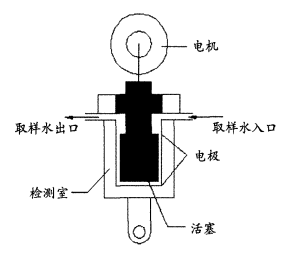
Sample intake. The water sample flows into the sampling cell. When the piston moves upward, the sample is carried into the bore.
Sample discharge. When the piston moves downward, the sample water is discharged from the bore.
Particle attachment. Particulate matter in the water temporarily attaches to the surfaces of the piston and the cylinder.
Signal conversion. As the water is pushed back by the piston, the positive and negative charges around these particles move toward the electrodes. The detected signal is amplified and converted into the SCV display value — this current is called the “streaming current”.
Performance Characteristics
Multi-Parameter Detection
Simultaneously detects parameters that affect the coagulation process, such as pH, turbidity, conductivity and UV254 organic matter.
Health Diagnosis & pH Compensation
Excellent sensor signal quality with health diagnosis and pH compensation functions for reliable, accurate measurement.
Lower Chemical Costs
Optimizes coagulant dosing and reduces chemical consumption while maintaining stable effluent water quality.
Longer Filter Runs
Reduces filter backwash frequency and membrane fouling, extending filter operating time and cutting maintenance.
Protective Options
Optional features include overdose protection, delayed start and slow acceleration at setpoint for safe, stable control.
User-Maintainable Design
Sturdy, durable structure that users can maintain themselves, with automatic sensor cleaning to reduce the cost of ownership.
Typical Applications
The Streaming Current Detector is applied in processes that require the addition of coagulants, such as municipal and industrial water treatment, sludge sedimentation and dewatering/filtration, papermaking, and pretreatment of reverse osmosis systems.
Municipal Water Treatment
Automatic coagulation control in drinking water plants under varying raw water conditions.
Chemical Industry
Coagulant optimization for industrial process water and wastewater treatment.
Electric Power Industry
Water treatment dosing control for power generation facilities.
Environmental Protection
Sludge dewatering and filter press polymer dosing control.
Food Industry
Process water coagulation monitoring for food and beverage production.
System Components
BT6308 Controller
- Power supply100–240 VAC / 0.75 A
- LanguageMultiple languages selectable
- Input4-way sensor input, expandable to 16-way
- OutputRS485 + relay; 4–20 mA optional
- EnclosureFlame-retardant ABS, IP65
- Dimensions230 × 209 × 103 mm
- Weight2 kg
SCM520 / SCM530 Sensors
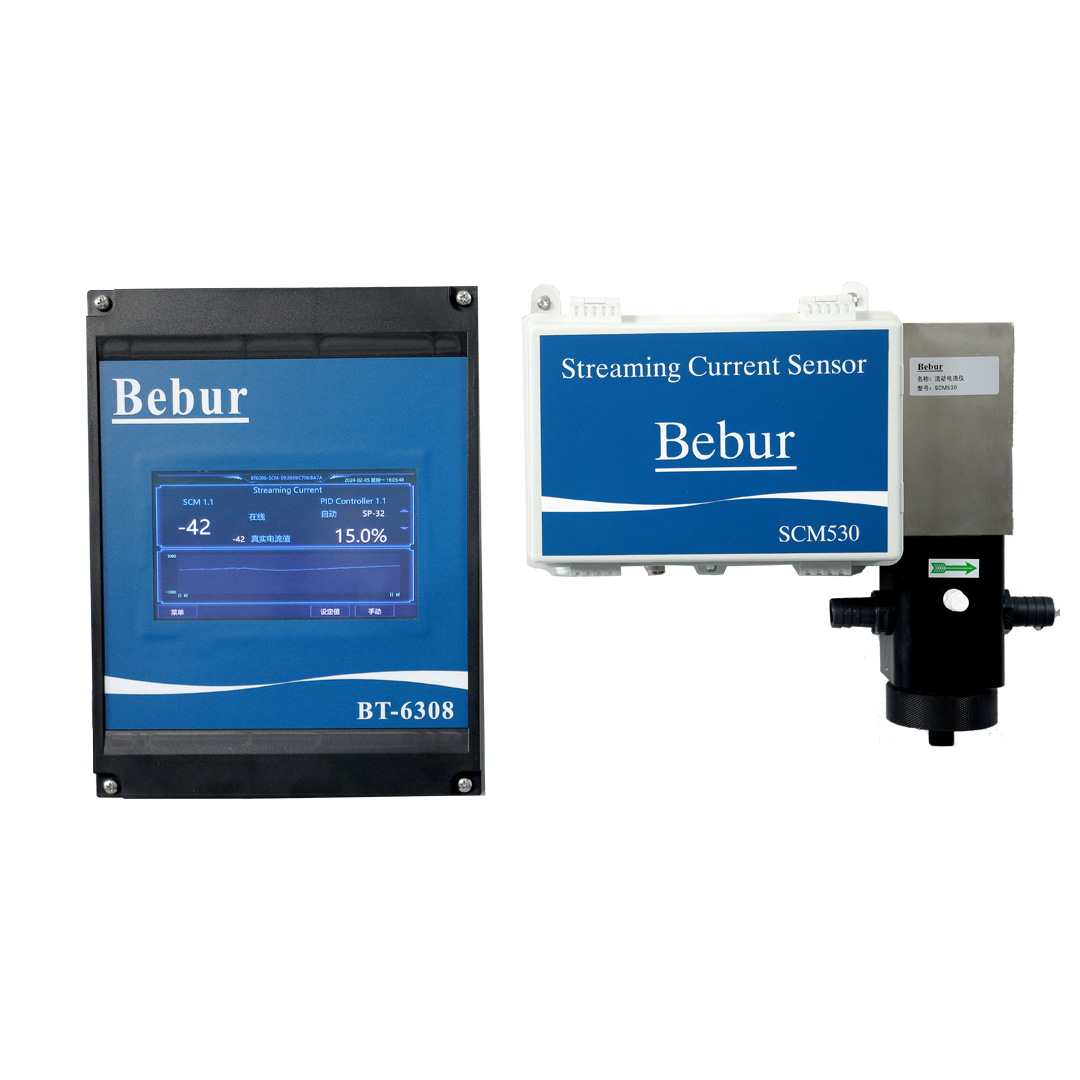
Streaming current sensors with external receiver design for high sample flow. Quick-replaceable piston, motor-speed self-diagnosis, heat dissipation module and automatic sensor cleaning — built from PVDF, POM, EPDM and stainless steel for long service life. PID control module included.
SCM520 Streaming Current Detector →
SCM530 Streaming Current Detectors →
Online Streaming Current Detector System →
Sensor Technical Specifications
| Parameter | SCM520 | SCM530 |
|---|---|---|
| Sample flow | 1–19 L/min | 1–40 L/min |
| Measured parameter | Streaming current | Streaming current |
| Measuring range | −1000 ~ +1000 | −1000 ~ +1000 |
| Sample cell | External receiver, high flow | External receiver, high flow |
| Piston | Quickly replaceable | Quickly replaceable |
| Sample inlet / outlet | 3/4″ (19 mm) OD | 1″ (25 mm) OD |
| Wetted materials | PVDF, POM, PVC or PE, EPDM, stainless steel | PVDF, POM, PVC or PE, EPDM, stainless steel |
| Wiring connection | 4-conductor shielded cable | 4-conductor shielded cable |
| Self-diagnosis | Motor speed | Motor speed |
| Enclosure | PC | PC |
| Power requirements | 220 VAC, 50 Hz | 220 VAC, 50 Hz |
| Working temperature | 0–50 °C | 0–50 °C |
| Heat dissipation module | Included | Included |
| Dimensions (W×H×D) | 310 × 388 × 165 mm | 445 × 377 × 165 mm |
| Weight | 5 kg | 7.5 kg |
| Self-cleaning | Automatic sensor cleaning | Automatic sensor cleaning |
| Optional parameters | pH, turbidity, conductivity, UV254 | pH, turbidity, conductivity, UV254 |
Frequently Asked Questions About Streaming Current Detectors
What is a Streaming Current Detector (SCD)?
A Streaming Current Detector (SCD) is an online instrument that detects the charge (similar to Zeta potential) of ions and colloids in water based on the streaming current principle. It is used for automatically regulating and controlling coagulant dosing, and is a core component of automatic dosing systems for water treatment and sludge dewatering.
How does a Streaming Current Detector work?
The water sample flows into the sampling cell. When the piston moves upward, the sample is carried into the bore; when the piston moves downward, the sample is discharged. Particles in the water temporarily attach to the surfaces of the piston and cylinder. As the water is pushed back by the piston, the counter-ions around these particles move toward the electrodes. The detected signal is amplified and converted into the SCV (streaming current value) display, which indirectly reflects the coagulation effect.
What is the difference between the SCM520 and SCM530 streaming current sensors?
The SCM520 handles a sample flow of 1–19 L/min with 3/4 inch (19 mm) OD connections and weighs 5 kg. The SCM530 handles a sample flow of 1–40 L/min with 1 inch (25 mm) OD connections and weighs 7.5 kg. Both measure streaming current over a range of −1000 to +1000 and work with the BT6308 controller.
Which additional parameters can the Streaming Current Detector measure?
Besides streaming current, the system can simultaneously detect parameters that affect the coagulation process, including pH, turbidity, conductivity and UV254 organic matter, with pH compensation and sensor health diagnosis functions.
How does a Streaming Current Detector reduce chemical dosing costs?
Through real-time monitoring, intelligent control and precise dosing, the monitor keeps finished water quality stable while preventing coagulant overdosing. It also reduces filter backwash frequency, lowers membrane fouling and extends filter run time, achieving chemical savings and higher plant operating efficiency.
Ready to Optimize Your Coagulant Dosing?
Tell us your application and water characteristics — Bebur engineers will recommend the right Streaming Current Detector configuration for your plant.
About Bebur & Contact
Bebur Technology Limited is a global solution provider of water quality analysis and gas detection with 20 years of experience. Headquartered in London, UK, and originating from Europe, Bebur is a high-tech enterprise integrating research, manufacturing, sales and after-sales service of electronic instruments, serving customers in more than 50 countries.
Sales & Inquiry
Email: zy@bebur.netSales Headquarters: Room 2003, 20th Floor, Building 3, No. 71, Songzhuang Road, Fengtai District, Beijing
Web: https://bebur.net/en/
Contact page: https://bebur.net/en/list_40/
After-sales Service Center
Address:No. 23, Kunlun Mountain Road,Deyang City, Sichuan ProvinceEmail: zy@bebur.net
Web: https://bebur.net/en/
Contact page: https://bebur.net/en/list_40/